Budget
What an animated video costs
The honest answer is that the range is enormous. The same minute of video can cost the price of a dinner or the price of a car, and the difference is not the running time. It is the technical approach. Below is what actually moves the number, so you arrive at a conversation knowing what you are buying.
The five things that move the price
- The technical approach. The same script can become a video cut from material that already exists, a 2D animation, a 3D scene built from scratch, or a physics simulation solved frame by frame. Those four things are nowhere near each other in cost.
- New shots versus reused ones. The expensive part is not the minute, it is the number of environments, characters and objects that have to exist for the first time. Ten shots in one set cost far less than three shots in three sets.
- The level of realism. A product that has to match the real thing, with the right material, weld and label, is a different job. A stylised drawing forgives; a photographic render forgives nothing.
- How many times it will change. Revision rounds cost, and they cost more the later they arrive. Approving script and look before animation starts is the easiest saving in this process.
- The deadline. A short deadline does not change the work, it changes how many people have to run in parallel and how much render sits waiting.
What pulls the price down
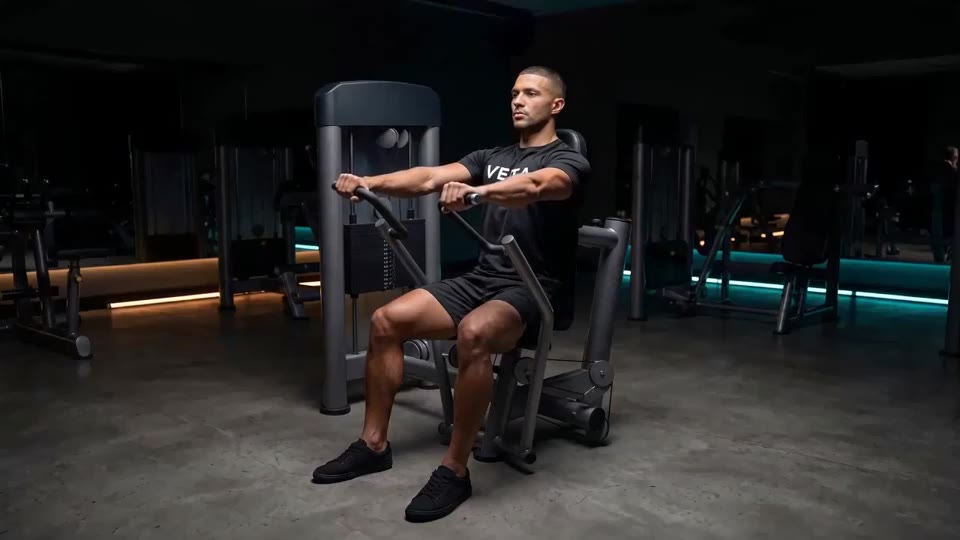
Material that already exists. If you have footage, product photography or a 3D model from the manufacturer, a large part of the budget is already paid. In the catalogue study below, every clip was rebuilt from footage the client already had, which preserves the exact movement and cuts the most expensive stage.
Repetition. An order of thirty pieces costs far less per piece than an order of three, because the visual base is built once and then locked.
Decisions closed before work starts. Reference picked, script approved, brand defined.
What pulls the price up
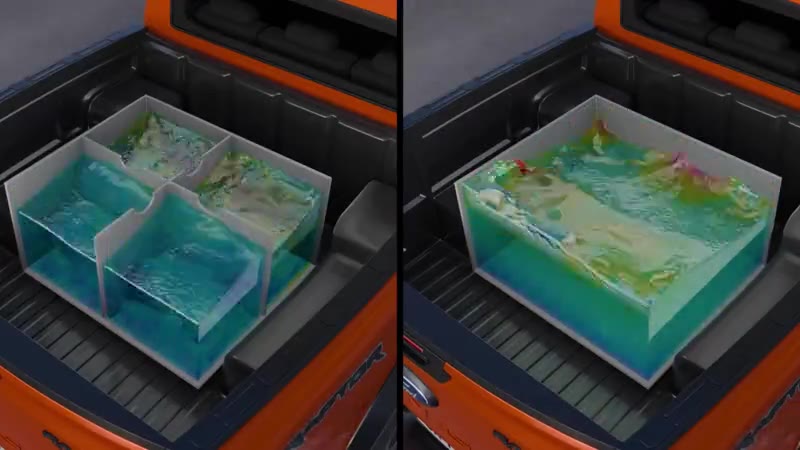
Physics simulation. Water, fire, cloth and destruction are not animated by hand: they are solved frame by frame, and the machine charges for that time. The water simulation piece below runs two tanks side by side in the same simulation, with colour mapping the speed of the liquid.
Integration with real footage. Placing a 3D element inside a live plate means tracking the camera, rebuilding the light of the scene and matching grain and focus. It is the difference between an element that is pasted on and an element that is there.
Characters. A character is the most expensive item in any animation budget, because it involves modelling, rigging, deformation and acting, and because the human eye forgives everything except people.
Why there is no price table on this page
Because it would lie. A simple job, solved on top of existing material, lands at a number that would fit on a personal credit card. A minute of animation with a character, simulation and live-action integration is in another order of magnitude, and both are called "a one-minute video".
A public table either scares off someone who had budget to spare, or disappoints someone who did not. I would rather look at your case and give you a number that means something.
What to send me to get a number
- A reference. A link to a video that looks like what you want, even from another industry.
- Where it runs and for how long. Paid ads, a trade show, your site, social, broadcast.
- What you already have. Footage, photography, a 3D model, brand guidelines, a script.
- How many pieces, and in which formats.
- The date it has to be live.
The questions that arrive with the budget
- How much does an animated video cost? The range is enormous and running time explains little of it. The same minute can cost the price of a dinner or the price of a car, and the difference is the technical approach. A video cut from material that already exists, a 2D animation, a 3D scene built from scratch and a physics simulation solved frame by frame are nowhere near each other in cost.
- Why is there no price table on the site? Because it would lie. A simple job, solved on top of existing material, fits on a personal credit card. A minute with a character, simulation and live-action integration is in another order of magnitude, and both are called a one-minute video. A public table either scares off someone who had budget to spare or disappoints someone who did not. I would rather look at your case and give a number that means something.
- What pulls the price up? Physics simulation, because water, fire, cloth and destruction are not animated by hand: they are solved frame by frame, and the machine charges for that time. Live-action integration, which means tracking the camera, rebuilding the light of the scene and matching grain and focus. And characters, the most expensive item in any animation budget, because the human eye forgives everything except people.
- And what pulls the price down? Material that already exists. Footage, product photography or the manufacturer's 3D model pay for the most expensive stage of the budget in advance. Repetition, because the visual base is built once and then locked, and thirty pieces cost far less per piece than three. And decisions closed before work starts: reference picked, script approved, brand defined.
- Do I need a budget in mind before talking to you? It helps, and not out of politeness. Without a range, the conversation becomes guesswork and the proposal lands in the wrong place twice. With a range, the scope can be drawn to fit it: fewer new sets, more reuse, a different level of finish. The form at the bottom of this page has a budget range field for exactly that, and nothing you write there appears anywhere public.
- Does the deadline move the price? It does. A short deadline does not change the work, it changes how many people have to run in parallel and how much render sits waiting in the queue. Rushing is possible when it has to be: a mixed-reality piece was delivered on a three-day deadline in March 2025, and the client rated it top marks. But rushing costs, and the number is said upfront, never afterwards.
- What do I send to get a number? A reference, even from another industry. Where the video runs and for how long. What you already have: footage, photography, a 3D model, brand guidelines, a script. How many pieces, and in which formats. And the date it has to be live. With that, what comes back is a scope with a schedule and a price, not a guess.
Related work

Clients and partners
- PG ProduçõesFeature on Amazon Prime
- PitchiPoyIsrael
- AG.CWBBrazil
- COOBIOBrazil
- GympassBrazil
- ÊxitoBrazil
- Violetta FilmsCroatia
- AkogunNigeria
- Yoru LabsTechnology
- Forest TrendsPartner
- AkaruiPartner
- ATUM StudioPartner
What clients wrote
Reviews from Gregorio Guirado's Upwork profile: 24 completed jobs, 20 with a rating, all of them 5.0. Upwork does not show the client's name, only the job and the date.
★★★★★
Despite the tight three-day deadline, Gregorio worked efficiently and delivered outstanding results. It was a pleasure collaborating with him, and I would gladly work with him again.
★★★★★
Gregorio got things done for this project very fast, and achieved lifelike image qualities that we didn't think would be possible at the beginning - very pleased to have worked…
★★★★★
Gregorio was amazing! He went above and beyond, and cleaned up a previous designers issues for us. We are hiring him again for more work. 5 stars all around!
★★★★★
Gregorio is an exceptionally talented professional. He is deeply attuned to detail and delivers exactly what is requested with results that achieve expectations. His turn-around is superb and his demeanor…
★★★★★
Gregorio crushed it! Super quick, really knows his stuff, and managed to handle my not-so-simple task way beyond what I expected. 100% recommend, and I'm definitely going with Gregorio again…
★★★★★
Gregorio is a fantastic digital artist. He was excellent at communicating throughout the entire process, I knew from the start that he could handle my unconventional request. He also provided…