Service
Product rendering services, for what a camera cannot shoot
Product photography solves what exists and can be placed in front of a camera. Product rendering services solve the rest: what does not exist yet, what only makes sense from the inside, and what has to be remade in dozens of variations without reshooting. Built in São Paulo, delivered worldwide.
When rendering beats photography
- The product does not exist yet. Rendering starts before the first unit leaves the line, and launch material is ready before the product is. Waiting for a physical sample to begin communication costs you the whole launch window.
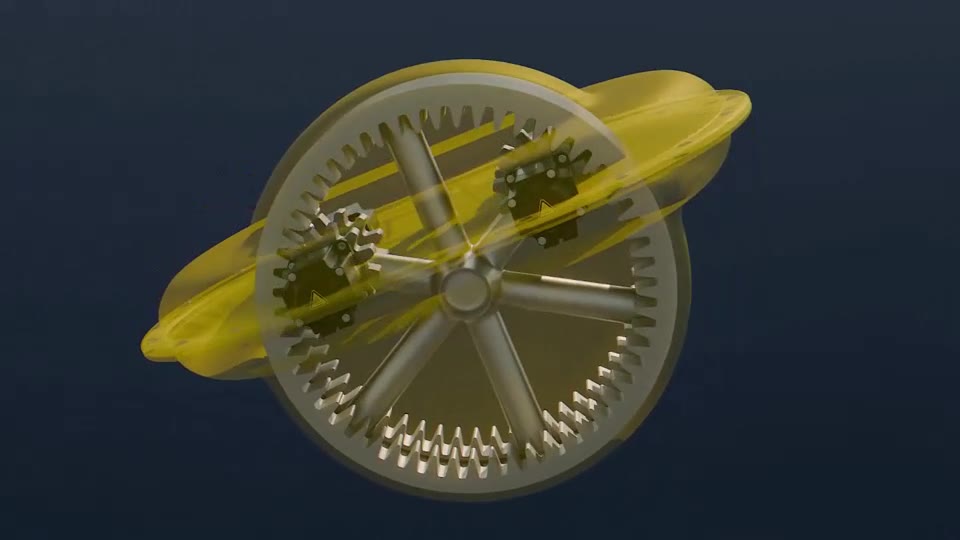
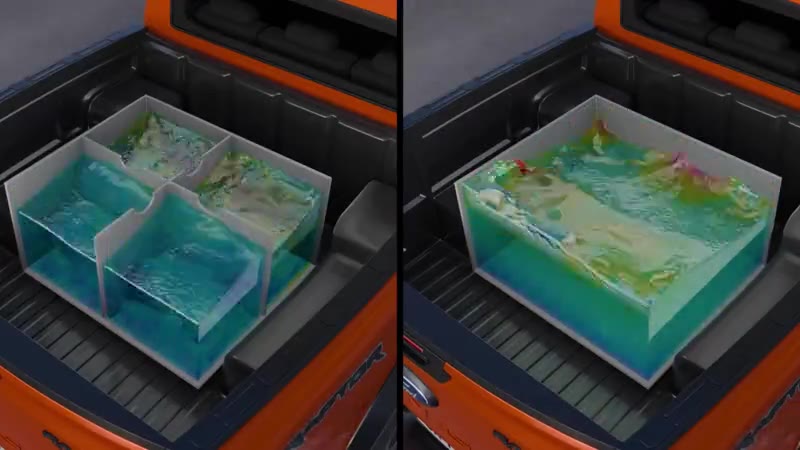
- The argument is on the inside. A housing that turns translucent without stopping its rotation, gears actually meshing, fluid moving inside a tank. A technical drawing cannot show the mechanism working, and a camera cannot see through metal.
- There are many variations. Colour, finish, size and packaging come from one model. Past a dozen variations, rendering costs less than photography, because the set does not get built again each time.
- The shot would be expensive or dangerous. Industrial equipment in operation, fire fighting, an environment you cannot build, a scale that does not fit a studio.
- The product has to appear in context. The same object in a kitchen, on a building site and in a lab, without three days of location for each.
What product rendering services include here
- Modelling. From the manufacturer's model, when one exists, or built from dimensioned technical drawings.
- Materials and finish. Brushed metal, injected plastic, glass, fabric, paint with clear coat. This is where a render convinces or does not: anyone gets the shape right, the material is what sells it.
- Lighting. White studio for catalogue, hard light for industrial product, ambient light for context of use.
- Stills and motion. The same scene gives catalogue photography and a turntable, cutaway or exploded-view video, with nothing rebuilt.
- Variations. Every colour, every size, every label, from a single base.
- Delivery formats. Square for marketplace, vertical for social, horizontal for site, and print resolution.
How the work runs
One. You send what you have: a 3D model, dimensioned drawings, or photographs of the object from every side. The more complete it is, the cheaper the job, because modelling is the most expensive stage.
Two. I come back with a grey framing, no materials and no lighting. This is where angle and composition get corrected, while correcting is still cheap.
Three. With the framing approved, materials, lighting and finish go in. You see the first finished image.
Four. Revisions. After that the base is locked, and every new variation costs a fraction of the first.
Cinco. Delivery in the agreed formats, plus the high-resolution file.
What makes a render look fake
It is almost never the modelling. It is lighting that is too perfect and materials that are too clean. A real object has a slightly rounded edge, dust, a wear mark, an imperfection in the clear coat and dirt at the bottom of a thread. A render that ignores that ends up looking like a cheap furniture catalogue.
The second reason is wrong scale. The eye knows the size of a screw without a ruler on screen, and when the proportion slips the whole image feels off without the viewer being able to say why.
The third is a camera with no imperfection. A real lens has distortion, depth of field and a falloff at the edges. A render shot on a perfect camera looks like a coloured technical drawing.
What we need from you
- The manufacturer's 3D model, if one exists. It cuts the most expensive stage of the budget.
- Without a model: dimensioned drawings, or photographs of the object from every side, including underneath.
- Colour and finish samples, and reference for how the product should look.
- Where it runs: catalogue, ads, trade show, website, packaging.
- How many variations, and which.
How much product rendering costs
There is no per-image price that does not lie, and the reason is the first image. Modelling the object can be half the budget, and once modelled the second image costs a fraction of the first. That is why an order of thirty images has a far lower per-image price than an order of three.
What moves the number: whether a manufacturer's model exists, how many different objects are involved, how many colour and finish variations, stills or motion, and whether the product stands alone on white or inside a built scene.
There is a whole page about that, with what pulls the price up and what pulls it down.
How long it takes
With the manufacturer's model in hand, the first finished image usually takes days, not weeks. Without a model, modelling drives the schedule, and that depends on the complexity of the part: a simple form is quick; a machine with hundreds of visible parts is not.
Once the base is approved, variations are fast. It is the opposite of photography, where each new variation is another day of studio.
How many revision rounds are included
Two on the visual base, meaning framing, materials and lighting, and one on each final image. That split exists for a reason: a change to the base is cheap, and a change after everything is rendered is expensive, because it sends the whole queue back.
Revisions beyond that are not forbidden, they are quoted, and I tell you the number before doing the work.
Who owns the files
The final image is yours, with no usage limit and no time-based licence. Use it wherever you want, for as long as you want.
The source file, meaning the 3D scene with model, materials and lighting, stays with GGfx by default. If you want that too, it is a separate line item with its own price, written into the work order before we start. It is worth it when you intend to rework the material yourself or with another studio later.
Showing the work in the portfolio: if you would rather we did not, just say so.
And when it is hundreds
An entire catalogue is a different problem, and it has a page of its own: the hard part is not the first image, it is the thousandth looking like its sibling, made months later.
Related work
Clients and partners
- PG ProduçõesFeature on Amazon Prime
- PitchiPoyIsrael
- AG.CWBBrazil
- COOBIOBrazil
- GympassBrazil
- ÊxitoBrazil
- Violetta FilmsCroatia
- AkogunNigeria
- Yoru LabsTechnology
- Forest TrendsPartner
- AkaruiPartner
- ATUM StudioPartner
What clients wrote
Reviews from Gregorio Guirado's Upwork profile: 24 completed jobs, 20 with a rating, all of them 5.0. Upwork does not show the client's name, only the job and the date.
★★★★★
Despite the tight three-day deadline, Gregorio worked efficiently and delivered outstanding results. It was a pleasure collaborating with him, and I would gladly work with him again.
★★★★★
Gregorio got things done for this project very fast, and achieved lifelike image qualities that we didn't think would be possible at the beginning - very pleased to have worked…
★★★★★
Gregorio was amazing! He went above and beyond, and cleaned up a previous designers issues for us. We are hiring him again for more work. 5 stars all around!
★★★★★
Gregorio is an exceptionally talented professional. He is deeply attuned to detail and delivers exactly what is requested with results that achieve expectations. His turn-around is superb and his demeanor…
★★★★★
Gregorio crushed it! Super quick, really knows his stuff, and managed to handle my not-so-simple task way beyond what I expected. 100% recommend, and I'm definitely going with Gregorio again…
★★★★★
Gregorio is a fantastic digital artist. He was excellent at communicating throughout the entire process, I knew from the start that he could handle my unconventional request. He also provided…