Service
A 2D animation studio that also runs 3D
Most of what gets called 2D animation today is not pure 2D: it is artwork leaning on 3D for shadow, camera and depth. GGfx runs both in one pipeline, and that is how it delivered post-production on an entire animated feature.
What we deliver in 2D
- 2D explainers and motion. For when the argument is abstract, or when drawing communicates faster than photography.
- 2D with 3D shadow. The artwork is 2D; the light, shadow and atmosphere come from a 3D layer underneath. It is what separates a painted scene from a scene that exists.
- Hybrid inside one film. Both films for the startup acceleration programme mix 2D and 3D in the same pipeline, on opposite visual systems.
- Feature compositing. An entire film through one pipeline, with automation written for the project.
The proof
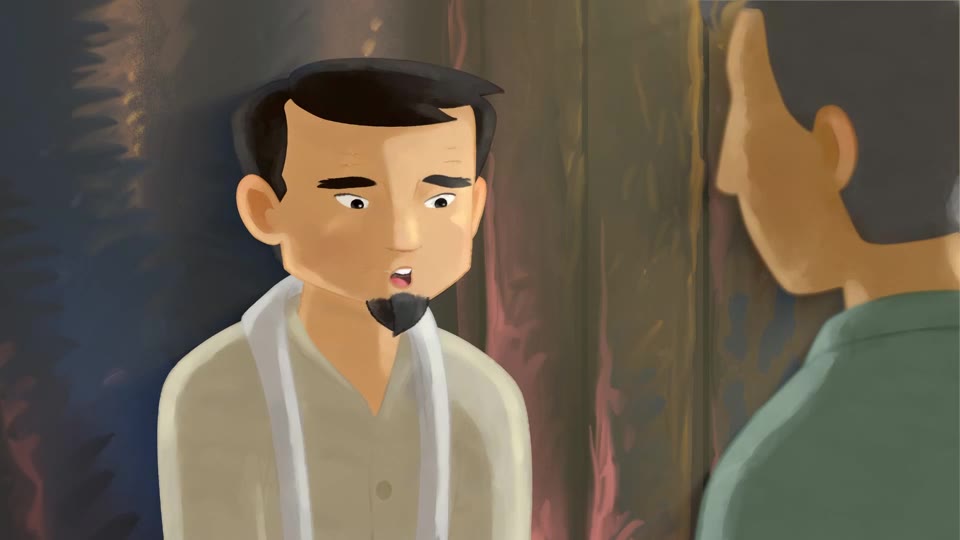
Meu Avô é um Nihonjin, an animated feature by PG Produções: a six-month contract, the whole film passing through GGfx compositing, a premiere on Amazon Prime and selection for Cannes, Annecy and Ventana Sur.
The core of the work was integrating 3D shadow into the 2D artwork and compositing the entire film. What made a feature fit into six months was not manpower: it was writing an automated Blender pipeline before production started.
When 2D beats 3D
When the subject is abstract and has no physical form. When the tone calls for drawing rather than realism. And when the budget cannot carry building everything in three dimensions: 2D costs less per new scene, because it does not have to exist in space.
If the product exists and has to look like itself, the route is 3D, on the 3D animation page.
What people ask before commissioning 2D
- Is 2D cheaper than 3D? Per new scene, usually yes. A 2D scene does not have to exist in space: no modelling, no scene lighting, no heavy render time behind it. The maths flips when the same element shows up many times and from many angles, because then building it once in 3D and reusing it costs less than redrawing it. The choice is about budget and tone, not taste.
- What is 2D with 3D shadow, and why does it matter? The artwork is still drawing. The light, the shadow and the atmosphere come from a 3D layer built underneath. It is what separates a painted scene from a scene that exists: it gives time of day, depth and volume without losing the line. That was the core of post-production on Meu Avô é um Nihonjin, the animated feature by PG Produções that premiered on Amazon Prime.
- Can you handle a large volume of shots? Yes, and the proof is an entire feature. A six-month contract, the whole film passing through GGfx compositing, a premiere on Amazon Prime and selection for Cannes, Annecy and Ventana Sur. What made it fit into six months was not manpower: it was writing an automated Blender pipeline before production started. That way of working became a Blender Conference talk, in Amsterdam.
- How much does a 2D animation cost? There is no per-minute price that does not lie. What moves the number is how many scenes and characters have to be drawn for the first time, the level of finish, whether voiceover and music are included, how many delivery formats, and the deadline. Script and style locked before animation starts is the easiest saving in this process. Send the reference and what you already have, and the number comes back with a scope.
- How long does it take? It depends on how much new artwork has to exist, not on the final running time. Storyboard and style approved is the milestone that holds the date, because from there the work is execution. As a sense of scale: the two films for the Curitiba Development Agency came to around three minutes of animation, delivered in six formats. The typical turnaround for a single piece is [CONFIRMAR].
- How many revision rounds are included? The number is written into the quote before work starts: [CONFIRMAR] on script and style, [CONFIRMAR] on the final animation. That split exists for a reason. Changing the drawing before animation is cheap; changing it once everything is composited is expensive, because it sends the whole queue back. Revisions beyond the agreement are not forbidden, they are quoted, and you get the number before the work.
- Who owns the files? Yours. The final video is yours, with no usage limit and no time-based licence, and the same goes for the project files when they are part of the agreed scope. GGfx may show the result in the portfolio, and one word from you keeps the work from appearing anywhere.
Related work
Clients and partners
- PG ProduçõesFeature on Amazon Prime
- PitchiPoyIsrael
- AG.CWBBrazil
- COOBIOBrazil
- GympassBrazil
- ÊxitoBrazil
- Violetta FilmsCroatia
- AkogunNigeria
- Yoru LabsTechnology
- Forest TrendsPartner
- AkaruiPartner
- ATUM StudioPartner
What clients wrote
Reviews from Gregorio Guirado's Upwork profile: 24 completed jobs, 20 with a rating, all of them 5.0. Upwork does not show the client's name, only the job and the date.
★★★★★
Despite the tight three-day deadline, Gregorio worked efficiently and delivered outstanding results. It was a pleasure collaborating with him, and I would gladly work with him again.
★★★★★
Gregorio got things done for this project very fast, and achieved lifelike image qualities that we didn't think would be possible at the beginning - very pleased to have worked…
★★★★★
Gregorio was amazing! He went above and beyond, and cleaned up a previous designers issues for us. We are hiring him again for more work. 5 stars all around!
★★★★★
Gregorio is an exceptionally talented professional. He is deeply attuned to detail and delivers exactly what is requested with results that achieve expectations. His turn-around is superb and his demeanor…
★★★★★
Gregorio crushed it! Super quick, really knows his stuff, and managed to handle my not-so-simple task way beyond what I expected. 100% recommend, and I'm definitely going with Gregorio again…
★★★★★
Gregorio is a fantastic digital artist. He was excellent at communicating throughout the entire process, I knew from the start that he could handle my unconventional request. He also provided…